

Harassment Laws in Pakistan: Complete Guide, Rights, Complaint Procedure & Punishments (2026)
Harassment Laws in Pakistan provide legal protection against workplace harassment, sexual harassment, cyber harassment, stalking, threats, and other forms of unlawful conduct. Harassment is a serious social and legal issue that affects people across Pakistan regardless of age, gender, profession, or social background. It can occur in workplaces, educational institutions, public places, or through digital platforms and may have serious emotional, psychological, and financial consequences.
To address this issue, Pakistan has enacted several laws that protect victims and provide legal remedies against offenders. This guide explains harassment laws in Pakistan, the rights of victims, complaint procedures, applicable punishments, and practical steps individuals can take to seek legal protection.
What Is Harassment?
Harassment refers to any unwanted behavior that intimidates, threatens, humiliates, embarrasses, or creates a hostile environment for another person. It may involve physical actions, verbal abuse, written communication, gestures, stalking, or electronic communication.
Harassment can occur in:
- Offices
- Schools and universities
- Hospitals
- Factories
- Government departments
- Public transport
- Shopping malls
- Social media platforms
- Messaging applications
- Online gaming platforms
Every individual has the right to live and work in an environment that respects their dignity and personal security.
Harassment Laws in Pakistan
Pakistan has developed a legal framework to address different forms of harassment. Depending on the circumstances, a case may involve workplace legislation, criminal law, or cybercrime law.
The principal legal framework includes:
- Protection Against Harassment of Women at the Workplace Act, 2010 (as amended)
- Pakistan Penal Code (PPC), including offences such as insulting modesty, criminal intimidation, assault, stalking, and related conduct where applicable
- Prevention of Electronic Crimes Act (PECA), 2016
- Code of Criminal Procedure (CrPC)
- Qanun-e-Shahadat Order (law of evidence)
These laws work together to protect victims, investigate complaints, and impose penalties on offenders.
Constitutional Protection Under Harassment Laws in Pakistan
The Constitution of Pakistan guarantees fundamental rights that support protection from harassment.
These include:
- Equality before law
- Right to life and liberty
- Human dignity
- Equal protection of law
- Freedom from discrimination
- Security of person
Harassment violates these constitutional principles because it interferes with an individual’s dignity, safety, and freedom.
Types of Harassment in Pakistan
Harassment can take many forms.
-
Workplace Harassment
Workplace harassment includes:
- Unwanted comments
- Offensive jokes
- Threats
- Bullying
- Sexual advances
- Discrimination
- Humiliating treatment
- Abuse of authority
Employers are legally expected to maintain a safe working environment and establish complaint mechanisms where required by law.
-
Sexual Harassment
Sexual harassment includes unwanted behavior of a sexual nature, such as:
- Unwanted touching
- Inappropriate messages
- Sexual comments
- Demands for sexual favors
- Repeated unwelcome invitations
- Displaying offensive material
- Physical intimidation
- Verbal abuse with sexual intent
Such conduct can occur in workplaces, educational institutions, public spaces, or online.
-
Verbal Harassment
Examples include:
- Insults
- Offensive language
- Threats
- Humiliating remarks
- Name-calling
- Continuous abusive communication
Repeated verbal harassment can seriously affect a person’s mental well-being.
- Physical Harassment
Physical harassment may involve:
- Pushing
- Grabbing
- Blocking someone’s path
- Unwanted physical contact
- Physical intimidation
Depending on the facts, these acts may also amount to criminal offences under Pakistani law.
-
Cyber Harassment
Technology has created new opportunities for offenders to target victims online.
Cyber harassment may include:
- Fake social media accounts
- Online blackmail
- Sharing private photographs without consent
- Threatening messages
- Defamation
- Identity theft
- Email harassment
- WhatsApp harassment
- Facebook harassment
- Instagram harassment
- TikTok harassment
- Cyberstalking
The Prevention of Electronic Crimes Act (PECA) provides legal mechanisms for investigating many forms of online misconduct.
-
Public Harassment
Public harassment may occur in:
- Markets
- Public transport
- Parks
- Streets
- Shopping centres
- Bus terminals
- Railway stations
Examples include:
- Catcalling
- Stalking
- Following someone without consent
- Offensive gestures
- Intimidation
- Physical misconduct
Victims should report such incidents promptly to the police or the appropriate authorities.

Workplace Harassment Laws in Pakistan
The Protection Against Harassment of Women at the Workplace Act, 2010 provides a legal framework for addressing workplace harassment.
Employers are generally expected to:
- Adopt anti-harassment policies where required.
- Establish complaint mechanisms.
- Conduct fair inquiries.
- Protect complainants from retaliation.
- Take appropriate disciplinary action when allegations are proven.
Employees should familiarize themselves with their organization’s complaint procedures and preserve evidence if harassment occurs.
Online and Cyber Harassment Laws in Pakistan
Online harassment has increased with the widespread use of digital platforms.
Common examples include:
- Fake profiles
- Hacking accounts
- Threatening emails
- Sharing private images
- Online stalking
- Financial blackmail
- Harassing voice messages
- Anonymous abuse
Victims should:
- Save screenshots.
- Preserve chat histories.
- Record relevant URLs or account details.
- Avoid deleting evidence.
- Report the matter through the appropriate legal channels, including the relevant cybercrime authorities where applicable.


Punishments Under Harassment Laws in Pakistan
The punishment for harassment depends on:
- The nature of the conduct
- The applicable law
- The available evidence
- The outcome of the investigation and court proceedings
Depending on the offence, consequences may include:
- Imprisonment
- Fines
- Departmental disciplinary action
- Removal from employment
- Compensation where provided by law
- Other penalties ordered by the court
Each case is decided on its own facts and the applicable legal provisions.
How to File a Harassment Complaint in Pakistan
If you experience harassment, consider taking the following steps:
- Ensure your immediate safety.
- Preserve all available evidence.
- Write down the date, time, and details of each incident.
- Identify any witnesses.
- Report the matter to your employer (if workplace-related) or the relevant authority.
- If the conduct amounts to a criminal offence, contact the police or the appropriate investigating agency.
- Seek legal advice if you are unsure about your rights or the correct procedure.
Early reporting can help protect evidence and support an effective investigation.
Evidence Required in Harassment Cases
Strong evidence can significantly assist in legal proceedings.
Useful evidence may include:
- Screenshots
- Emails
- WhatsApp messages
- SMS records
- CCTV footage
- Audio or video recordings (where lawfully obtained)
- Witness statements
- Medical reports (where relevant)
- Employment records
- Complaint correspondence
Do not alter or fabricate evidence. Preserve original records whenever possible.
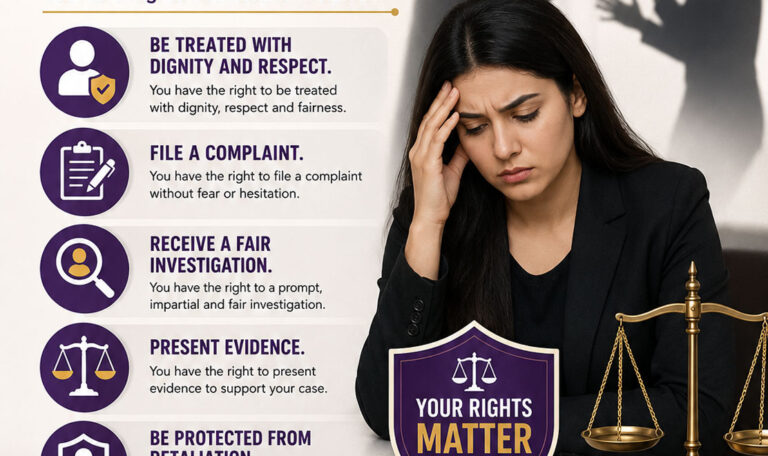
Rights of Harassment Victims in Pakistan
Victims generally have the right to:
- Be treated with dignity and respect.
- File a complaint.
- Receive a fair investigation.
- Present evidence.
- Be protected from retaliation where the law provides.
- Seek legal representation.
- Pursue remedies available under the applicable law.
Why Choose Uzair Rasheed Sandhu Advocate High Court?
If you are facing workplace harassment, cyber harassment, public harassment, or any other form of unlawful conduct, obtaining timely legal advice can make a significant difference. Uzair Rasheed Sandhu Advocate High Court is committed to protecting the legal rights of harassment victims across Pakistan by providing practical legal guidance, strategic representation, and confidential support throughout every stage of the legal process.
Whether you need assistance with filing a workplace harassment complaint, registering an FIR, reporting cyber harassment to the relevant authorities, seeking protection under Pakistani law, or pursuing legal action before the courts, our experienced legal team is here to help.
When You Choose Us, You Benefit From:
- Professional legal advice based on the latest Pakistani laws.
- Experienced representation before the High Courts and other legal forums.
- Assistance with workplace harassment complaints and inquiry proceedings.
- Legal support for cyber harassment, online blackmail, fake social media accounts, and digital evidence.
- Guidance on FIR registration and criminal complaint procedures.
- Case evaluation and legal strategy tailored to your specific circumstances.
- Confidential handling of sensitive legal matters.
- Transparent communication and regular case updates.
- Representation for clients residing in Pakistan and overseas Pakistanis.
- Efficient document preparation, legal drafting, and court representation.
Our priority is to protect your legal rights while ensuring every matter is handled with professionalism, confidentiality, and legal precision.
Contact & Book a Legal Consultation
If you need trusted legal assistance regarding Harassment Laws in Pakistan, workplace harassment, cyber harassment, criminal complaints, or related legal matters, contact our office today for professional legal support.
📍 Office: Lahore High Court, Lahore, Pakistan
📞 Phone: +92 307 4834430
✉️ Email: legalinformationworld@gmail.com
🌐 Website: www.legalinformation.asia
Our team is committed to providing reliable legal services with integrity, efficiency, and a client-focused approach.
FAQs
What is harassment under Pakistani law?
Harassment generally refers to unwanted conduct that violates a person’s dignity or creates an intimidating, hostile, degrading, humiliating, or offensive environment, depending on the applicable law.
Can men file harassment complaints?
Yes. Depending on the nature of the conduct and the applicable legal provisions, men may also have legal remedies.
Is online harassment a crime?
Certain forms of online harassment may constitute offences under the Prevention of Electronic Crimes Act (PECA) and other applicable laws.
Can WhatsApp messages be used as evidence?
Electronic communications may be relevant evidence, subject to the applicable rules of evidence and court procedures.
What should I do if someone threatens me online?
Preserve the evidence, avoid engaging with the offender, and report the matter to the appropriate authorities.
Can harassment happen outside the workplace?
Yes. Harassment can occur in public places, educational institutions, homes, online platforms, and other settings.
How long does a harassment case take?
The timeline depends on the complexity of the case, the investigation, and the court or departmental process.
Conclusion
Harassment laws in Pakistan provide legal mechanisms to address workplace harassment, cyber harassment, public harassment, and other unlawful conduct. Understanding your rights, preserving evidence, and following the appropriate complaint procedures can make a significant difference when seeking legal protection.
If you believe you have experienced harassment or require legal guidance, consult a qualified lawyer who can assess your circumstances, explain the applicable law, and advise you on the most appropriate course of action.