

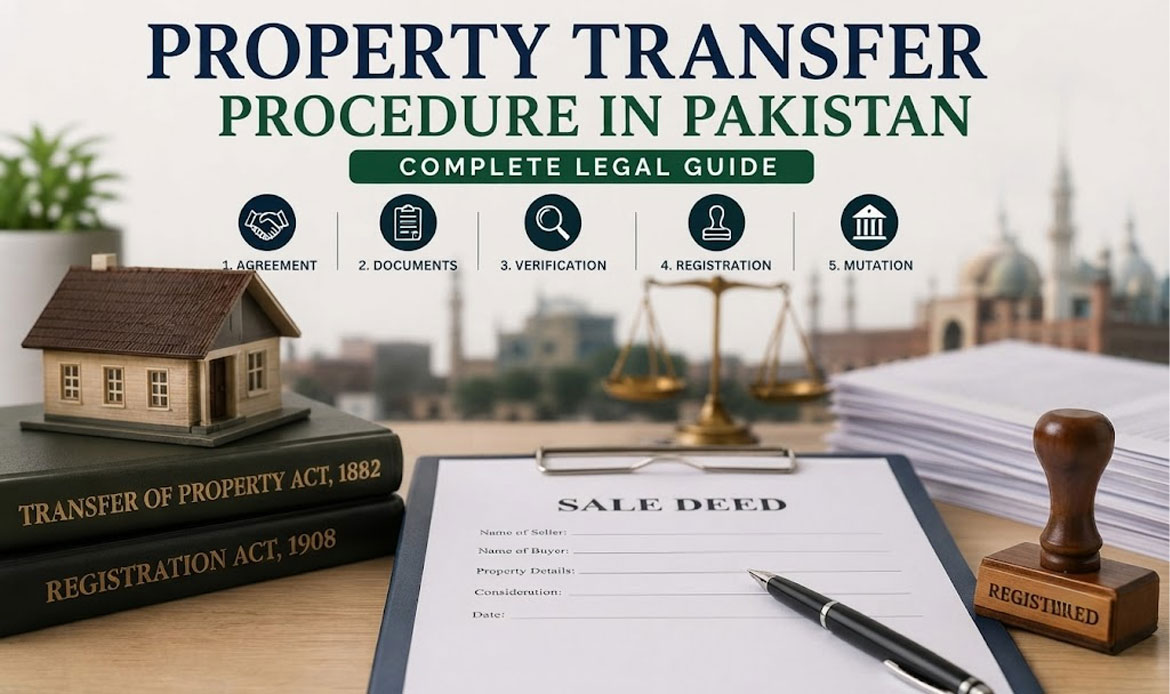
Property Transfer Procedure in Pakistan – Complete Legal Guide 2026
Property transfer is one of the most important legal processes in Pakistan. Whether you are buying, selling, inheriting, gifting, or transferring property to a family member, understanding the Property Transfer Procedure in Pakistan is essential to avoid fraud, legal disputes, and future ownership issues.
This comprehensive guide explains the legal procedure, required documents, transfer fees, taxes, verification methods, and common mistakes while transferring property in Pakistan.
What is Property Transfer?
Property transfer is the legal process through which ownership of immovable property is transferred from one person to another through sale, gift, inheritance, exchange, or court order.
Once the transfer is completed, the new owner becomes the lawful owner of the property.
Property Transfer Laws in Pakistan
Several laws regulate the Property Transfer Procedure in Pakistan, including:
- Transfer of Property Act, 1882
- Registration Act, 1908
- Stamp Act, 1899
- Land Revenue Act
- Provincial Revenue Rules
- Income Tax Ordinance
- Capital Value Tax Regulations
Each province may have additional rules for property registration and mutation.
Types of Property Transfer
Property ownership can be transferred through:
- Sale Deed
- Gift Deed (Hiba)
- Inheritance
- Exchange
- Family Settlement
- Court Decree
- Relinquishment Deed
- Partition
Each method follows a different legal procedure.
Eligibility for Property Transfer in Pakistan
To complete the Property Transfer Procedure in Pakistan, both the transferor (seller) and the transferee (buyer) must meet certain legal requirements. Generally, any competent adult who is legally authorized to own or transfer property may participate in a property transaction. The person transferring the property must have a valid ownership title and the legal right to sell, gift, or otherwise transfer the property.
The following individuals or entities are generally eligible to transfer or receive property in Pakistan:
- Pakistani citizens
- Overseas Pakistanis
- Legal heirs inheriting property
- Individuals acting through a legally registered Power of Attorney
- Companies and registered business entities
- Trusts and other legally recognized organizations
Before proceeding, all parties should ensure their identity documents, ownership records, and supporting legal documents are complete and verified. Proper verification helps ensure a smooth and legally valid property transfer.
Property Transfer Procedure in Pakistan
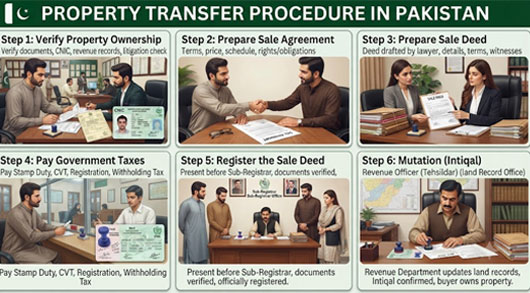
The Property Transfer Procedure in Pakistan generally involves the following steps:
Step 1: Verify Property Ownership
Before purchasing any property:
- Verify ownership documents.
- Check the seller’s CNIC.
- Confirm the property is free from litigation.
- Verify revenue records.
- Confirm no outstanding taxes.
Step 2: Prepare Sale Agreement
The buyer and seller prepare a Sale Agreement mentioning:
- Property details
- Sale price
- Payment schedule
- Possession date
- Rights and obligations
Step 3: Prepare Sale Deed
A Sale Deed is drafted by a property lawyer.
The Sale Deed contains:
- Buyer details
- Seller details
- Property description
- Purchase price
- Witness details
- Terms and conditions
Step 4: Pay Government Taxes
The buyer pays applicable government charges such as:
- Stamp Duty
- Registration Fee
- Capital Value Tax (CVT)
- Withholding Tax
- Advance Tax (where applicable)
The amount depends upon the property’s value and province.
Step 5: Register the Sale Deed
The Sale Deed is presented before the Sub-Registrar.
Both buyer and seller must appear with:
- Original CNICs
- Witnesses
- Property documents
- Passport-size photographs (where required)
After verification, the deed is officially registered.
Step 6: Mutation (Intiqal)
After registration, the mutation (Intiqal) process is completed in the Revenue Department.
The mutation updates the government’s land records in the buyer’s name.
Without mutation, ownership records may remain incomplete.
Documents Required for Property Transfer
The following documents are generally required:
- Original Property Documents
- Sale Deed
- Seller CNIC
- Buyer CNIC
- Passport-size Photographs
- Fard Malkiat
- Registry Copy
- Mutation Record
- Tax Payment Receipts
- NOC (if applicable)
- Power of Attorney (if applicable)
Property Verification Before Transfer
Always verify:
- Ownership record
- Property boundaries
- Encumbrances
- Court cases
- Bank mortgage
- Utility dues
- Housing society approval
- Revenue record
- Approved map
Proper verification protects buyers from fraud.
Buyers should also verify the ownership and land records through the Punjab Land Records Authority (PLRA) where applicable. The official PLRA portal allows users to check land records and ownership details online, helping reduce the risk of fraud before completing a property transaction.
Property Transfer Fees and Taxes
Depending on the province, the following charges may apply:
- Stamp Duty
- Registration Fee
- Capital Value Tax
- Withholding Tax
- Advance Tax
- Mutation Fee
- Service Charges
Rates vary according to:
- Province
- Property value
- Residential or commercial property
- Filer or non-filer status
Mutation (Intiqal) Procedure
Mutation records ownership in the Revenue Department.
The process generally includes:
- Submission of application
- Verification of documents
- Revenue Officer hearing
- Witness statements
- Approval
- Updating land records
Property Transfer Through Gift (Hiba)
Family members often transfer property through Gift Deeds.
The legal requirements include:
- Free consent
- Acceptance by the recipient
- Delivery of possession
- Registration (recommended and often required depending on applicable law)
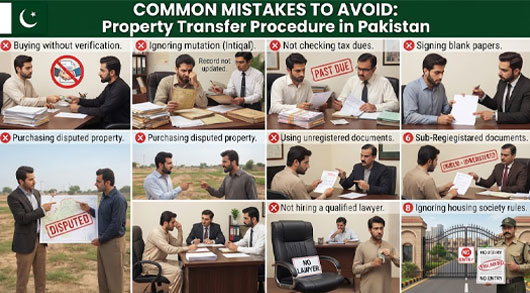
Common Mistakes to Avoid
Avoid these mistakes while following the Property Transfer Procedure in Pakistan:
- Buying without verification
- Ignoring mutation
- Not checking tax dues
- Signing blank papers
- Purchasing disputed property
- Using unregistered documents
- Not hiring a qualified lawyer
- Ignoring housing society rules
Why Choose Advocate Uzair Rasheed Sandhu?
Advocate Uzair Rasheed Sandhu provides professional legal assistance for:
- Property Verification
- Sale Agreements
- Sale Deeds
- Property Registration
- Mutation (Intiqal)
- Gift Deeds
- Inheritance Property Transfer
- Property Litigation
- Legal Documentation
- Court Representation
Professional legal guidance helps protect your investment and ensures compliance with Pakistani property laws.
For trusted and professional Property Transfer Services in Pakistan, contact our office today. We handle every case with diligence, legal precision, confidentiality, and efficiency.
📍 Office: Lahore High Court, Lahore, Pakistan
📞 Phone: +92 307 4834430
✉️ Email: legalinformationworld@gmail.com
🌐 Website: www.legalinformation.asia
FAQs
How long does the Property Transfer Procedure in Pakistan take?
The duration depends on the province, document verification, and mutation process. In straightforward cases, registration may be completed within a few days, while mutation can take additional time.
Is mutation necessary after registration?
Yes. Mutation updates the government land records and is an important step in completing the ownership transfer.
Can property be transferred through a Gift Deed?
Yes. Property can be legally transferred through a Gift Deed (Hiba), subject to the applicable legal requirements and registration procedures.
What documents are required for property transfer?
Typically, you will need CNICs of the buyer and seller, original property documents, the Sale Deed or Gift Deed, tax payment receipts, and any applicable NOC or Power of Attorney.
Can overseas Pakistanis transfer property?
Yes. Overseas Pakistanis can transfer property through a valid Power of Attorney or by appearing in person, depending on the circumstances and legal requirements.
Conclusion
Understanding the Property Transfer Procedure in Pakistan is essential for protecting your ownership rights and avoiding legal complications. From verifying ownership and preparing legal documents to paying taxes, registering the deed, and completing mutation, every step plays a vital role in ensuring a valid transfer. Seeking guidance from an experienced property lawyer can help you complete the process smoothly and reduce the risk of future disputes.