

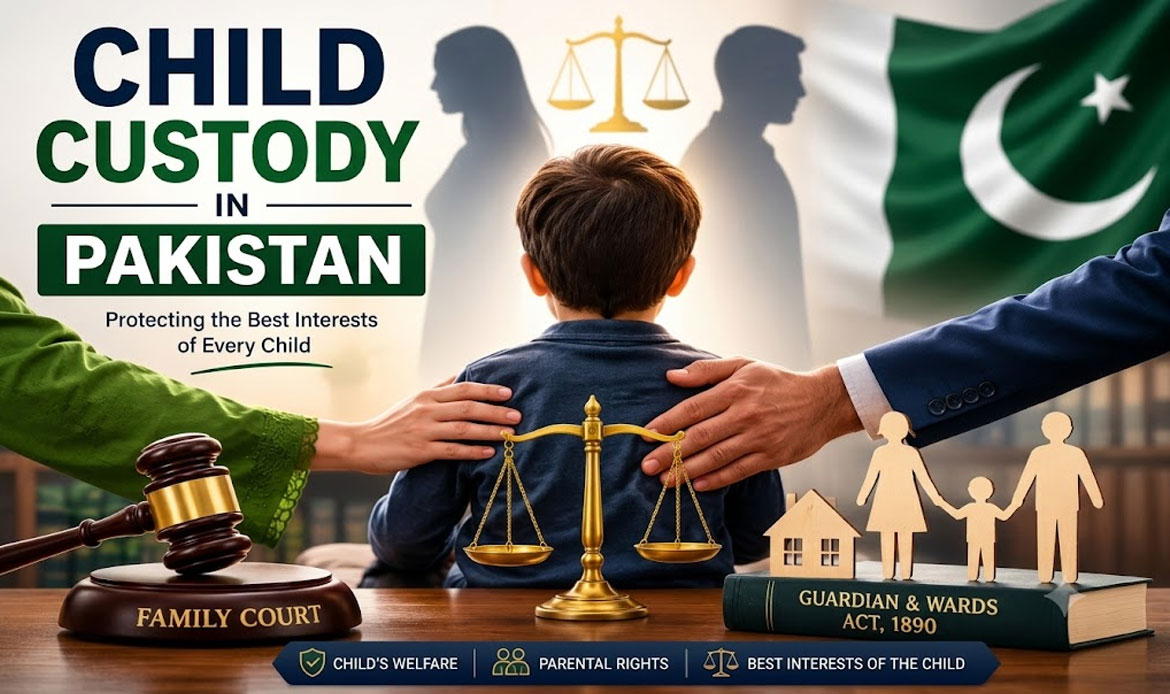
Child Custody in Pakistan – Complete Legal Guide
Child custody is one of the most sensitive and emotional issues faced by families after separation or divorce. While parents may disagree over who should care for a child, Pakistani law places the child’s welfare above the interests of either parent. The courts carefully examine every case to ensure that the child grows up in a safe, stable, and supportive environment.
Many parents believe that custody automatically belongs to the mother or the father after divorce. However, this is not always true. Family Courts in Pakistan decide custody matters based on the best interests of the child rather than following a fixed rule. Factors such as the child’s age, education, health, emotional well-being, and the ability of each parent to provide proper care are all considered before making a decision.
This comprehensive guide explains the child custody laws in Pakistan, the rights of mothers and fathers, the legal procedure for filing a custody case, guardianship, visitation rights, required documents, and answers to frequently asked questions. Whether you are seeking custody, defending your parental rights, or simply looking to understand Pakistani family law, this guide provides practical and legally accurate information.
What Is Child Custody?
Child custody refers to the legal right and responsibility to care for, protect, and make important decisions regarding a child’s upbringing. It determines where the child will live, who will provide daily care, and who has the authority to make decisions about education, healthcare, and general welfare.
In Pakistan, child custody cases are decided by Family Courts while keeping the child’s welfare as the highest priority. Custody does not only involve physical care but also includes ensuring that the child receives proper education, emotional support, healthcare, and moral guidance.
Even if one parent is granted custody, the other parent may still receive visitation rights unless the court believes such contact would harm the child.
Child Custody Laws in Pakistan
Child custody matters in Pakistan are governed by several important laws that provide legal protection for children and define the rights and responsibilities of parents and guardians.
The most significant laws include:
Guardians and Wards Act, 1890
The Guardians and Wards Act, 1890 is the primary law governing guardianship and child custody in Pakistan. It authorizes the court to appoint a suitable guardian when necessary and provides guidance for deciding custody disputes.
The Act requires the court to prioritize the child’s welfare over all other considerations. Financial status alone does not guarantee custody if another arrangement better serves the child’s well-being.
Family Courts Act, 1964
The Family Courts Act, 1964 gives Family Courts the authority to hear and decide child custody, guardianship, maintenance, and other family disputes.
Family Courts are designed to provide a specialized legal forum where family matters can be resolved more efficiently while protecting the interests of children.
Islamic Principles
Since Pakistan follows Islamic family law in many personal matters, courts also consider Islamic principles while deciding custody disputes. Islamic law recognizes the importance of both parents in a child’s life and encourages arrangements that promote the child’s welfare and moral upbringing.
However, Islamic principles are applied alongside statutory law, and the child’s welfare always remains the deciding factor.
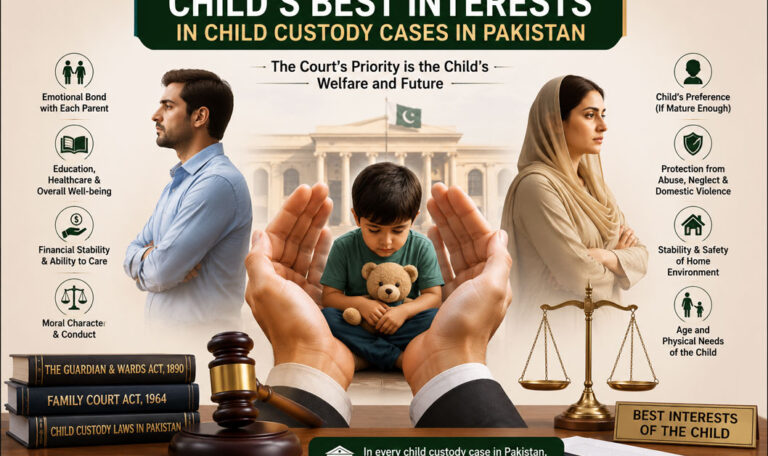
What Does the Court Consider Before Granting Custody?
Every custody case is unique. The Family Court carefully examines the facts before making its decision.
Some of the most important factors include:
- The age of the child
- The physical and mental health of both parents
- Emotional attachment between the child and each parent
- Educational needs of the child
- Financial stability of the parents
- Safe and healthy living environment
- Character and conduct of each parent
- Ability to provide proper care and supervision
- The child’s own preference (where appropriate)
- Any history of neglect, abuse, or domestic violence
The court does not automatically favor either parent. Instead, it determines which arrangement best protects the child’s long-term welfare.
Types of Child Custody in Pakistan
Understanding the different forms of custody helps parents know their legal rights and responsibilities.
Physical Custody
Physical custody means the child lives primarily with one parent or guardian, who is responsible for the child’s daily care, food, education, healthcare, and routine activities.
The other parent may receive visitation rights according to the court’s order.
Legal Custody
Legal custody gives a parent the authority to make major decisions concerning the child’s:
- Education
- Medical treatment
- Religious upbringing
- General welfare
In some cases, one parent may have physical custody while both parents share legal custody.
Temporary Custody
Temporary custody is granted while a custody case is pending before the court.
Its purpose is to ensure the child’s immediate safety and stability until a final judgment is issued.
Permanent Custody
Permanent custody is awarded after the court completes the trial and carefully Study all evidence.
Although called “permanent,” custody orders may be modified if circumstances significantly change or if the child’s welfare requires a different arrangement.
Joint Custody
Joint custody allows both parents to participate in raising the child.
Depending on the court’s order, parents may share:
- Decision-making authority
- Educational responsibilities
- Healthcare decisions
- Parenting time
Although joint custody is less common in Pakistan than in some other countries, courts may encourage cooperative parenting when it benefits the child.
Who Gets Child Custody After Divorce in Pakistan?
One of the most frequently asked questions is whether the mother or father automatically receives custody after divorce.
The simple answer is no.
There is no automatic rule that grants custody to either parent. Instead, the Family Court examines the specific circumstances of each case.
Generally:
- Mothers are often granted custody of younger children because they are considered better suited to provide daily care during early childhood.
- Fathers remain legally responsible for the financial maintenance of their children, even if they do not have physical custody.
- Older children may have their own wishes considered by the court, depending on their maturity and understanding.
- If either parent is unable to provide a safe or stable environment, custody may be awarded to another suitable guardian.
Ultimately, the court’s decision depends entirely on what is in the child’s best interests.
Child Custody Rights of Mothers in Pakistan
Mothers play a vital role in the upbringing of children, especially during their early years. Pakistani courts often recognize the importance of maintaining a child’s emotional bond with the mother.
However, custody is not an absolute legal right.
The court considers several factors before granting custody to the mother, including:
- Her physical and mental health
- Ability to provide proper care
- Living conditions
- Educational opportunities for the child
- Moral character
- Emotional relationship with the child
- Safety of the home environment
A mother who can provide a loving, secure, and healthy environment is often considered the most suitable custodian for young children.
However, if evidence shows that remaining with the mother would not serve the child’s welfare, the court may award custody to the father or another suitable guardian.
Child Custody Rights of Fathers in Pakistan
Although mothers frequently receive custody of younger children, fathers continue to play a crucial role under Pakistani law.
A father is generally regarded as the natural guardian responsible for:
- Financial support
- Educational expenses
- Healthcare costs
- Overall protection of the child
The father may also seek custody if he believes it is in the child’s best interests.
The court may grant custody to the father where:
- The mother is unable to care for the child.
- The child’s welfare is at risk.
- Better educational opportunities are available.
- The father can provide a safer and more stable environment.
Every case is decided on its own facts rather than assumptions based on gender.
Need Legal Assistance for a Child Custody Case in Pakistan?
Child custody disputes can be legally and emotionally challenging. Whether you are seeking custody of your child, defending your parental rights, applying for guardianship, or requesting visitation rights, obtaining professional legal guidance can help you understand the legal process and present your case effectively before the Family Court.
Advocate Uzair Rasheed Sandhu, practicing at the Lahore High Court, provides legal assistance in family law matters, including child custody, guardianship, divorce, khula, child maintenance, and other family court proceedings. Every case is unique, and legal advice tailored to your circumstances can help you understand your rights and the procedures involved.
How to Contact Uzair Rasheed Sandhu Advocate High Court
If you require legal consultation or representation in a Child Custody or Guardianship case, you may contact:
👨⚖️ Uzair Rasheed Sandhu
Advocate High Court
📍 Office: Lahore High Court, Lahore, Pakistan
📞 Phone: +92 307 4834430
✉️ Email: legalinformationworld@gmail.com
🌐 Website: https://legalinformation.asia
If you are facing a child custody dispute or need legal guidance regarding your parental rights, you can contact Advocate Uzair Rasheed Sandhu to discuss your legal options and the procedures applicable to your case.
Conclusion
Child custody disputes require careful legal consideration because they directly affect a child’s future. Pakistani Family Courts do not simply decide custody based on whether the parent is the mother or father. Instead, they examine all relevant circumstances and prioritize the child’s welfare above everything else.
Understanding the legal framework, parental rights, and the factors considered by the court helps parents make informed decisions and better protect their children’s interests.
In the next part of this guide, we will discuss guardianship, visitation rights, custody after Khula and divorce, required documents, Family Court procedure, court fees, and frequently asked questions.