

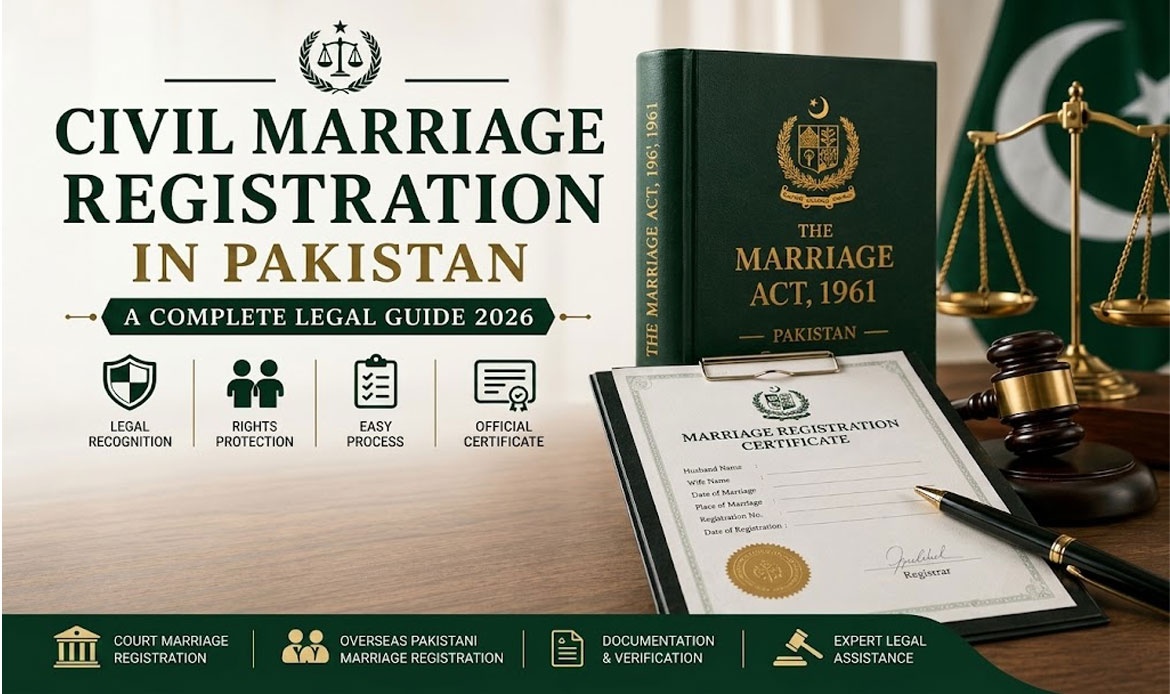
Civil Marriage Registration in Pakistan: Complete Legal Process, Documents, Benefits & Rights (2026 Guide)
Civil Marriage Registration is the official legal process of recording a marriage with the relevant government authority. Registering a marriage protects the legal rights of both spouses and provides documentary proof that the marriage is recognized under Pakistani law. Whether the marriage is performed through a Nikah, court marriage, or any legally recognized ceremony, registration is an essential step that ensures the marriage is officially documented.
Many couples mistakenly believe that performing a Nikah alone is sufficient. While the religious ceremony is an important part of marriage, legal registration creates an official government record that is often required for obtaining passports, visas, inheritance claims, child registration, bank matters, property transfers, and numerous other legal proceedings.
This comprehensive guide explains everything you need to know about Civil Marriage Registration in Pakistan, including the legal process, eligibility criteria, required documents, applicable laws, benefits, common mistakes, and frequently asked questions.
What is Civil Marriage Registration?
Civil Marriage Registration is the legal recording of a marriage by the competent government authority after the marriage has been solemnized according to the applicable laws of Pakistan. Once registered, the marriage becomes officially recognized and the spouses receive a Marriage Registration Certificate (MRC), which serves as legal evidence of their marital status.
Marriage registration helps protect the interests of both spouses and their children by providing a reliable legal record that can be used whenever proof of marriage is required.
Why is Civil Marriage Registration Important?
Marriage registration is more than an administrative requirement. It provides legal certainty and protects families from future disputes.
Some of the major benefits include:
- Provides official proof of marriage.
- Protects the legal rights of husband and wife.
- Simplifies visa and immigration applications.
- Required for NADRA and passport-related procedures.
- Assists in inheritance and succession matters.
- Helps register the birth of children.
- Supports legal claims in Family Courts.
- Prevents disputes regarding marital status.
- Provides documentary evidence in property and financial matters.
A registered marriage offers greater legal protection and minimizes the risk of complications that may arise from an unregistered marriage.
Who Can Register a Marriage in Pakistan?
Generally, marriages can be registered by eligible couples who have fulfilled the legal requirements prescribed under Pakistani law. Registration is commonly available for:
- Muslim marriages.
- Court marriages.
- Overseas Pakistani marriages (subject to applicable procedures).
- Marriages involving foreign nationals where permitted by law.
- Marriages already solemnized but not previously registered.
The registration process may vary depending on the nature of the marriage and the local authority responsible for registration.
Legal Framework Governing Marriage Registration in Pakistan
Marriage registration in Pakistan is regulated through various laws depending upon religion and jurisdiction. Some of the important legal provisions include:
- Muslim Family Laws Ordinance, 1961
- Relevant Provincial Local Government Laws
- Family Courts Act, 1964
- NADRA Rules regarding issuance of Marriage Registration Certificates
- Applicable personal laws governing non-Muslim marriages
The applicable legal procedure may differ depending on the province and the religious background of the parties. Therefore, obtaining proper legal guidance helps ensure compliance with all legal requirements.
Eligibility Criteria for Civil Marriage Registration
Before registering a marriage, the parties should satisfy the legal requirements prescribed by Pakistani law. Generally, the following conditions apply:
- Both parties must possess legal capacity to marry.
- The marriage must have been solemnized in accordance with the applicable law.
- Required identity documents should be available.
- Necessary witnesses should be identifiable where required.
- The marriage should not violate any applicable legal restrictions.
Meeting these requirements helps avoid delays during the registration process.
Benefits of Civil Marriage Registration
Civil Marriage Registration offers legal protection, official recognition, and peace of mind for married couples. It establishes a valid legal record of the marriage and helps safeguard the rights of both spouses under Pakistani law. Some of the key benefits include:
- Provides Legal Recognition: Confirms that the marriage is officially recognized by the relevant government authority.
- Protects Spouses’ Rights: Helps protect the legal rights of both husband and wife in family and property matters.
- Required for Legal Documentation: Necessary for obtaining a Marriage Registration Certificate (MRC), passports, visas, and immigration applications.
- Supports Inheritance Claims: Serves as legal proof of marriage in inheritance and succession matters.
- Facilitates Child Registration: Helps with the registration of children and other family-related legal procedures.
- Reduces Future Disputes: An official marriage record minimizes conflicts regarding marital status or legal rights.
- Useful in Court Proceedings: Acts as reliable evidence in Family Court and other legal matters.
- Ensures Compliance with the Law: Demonstrates that the marriage has been registered in accordance with the applicable laws of Pakistan.
Required Documents for Civil Marriage Registration
Although documentation requirements may differ depending on the authority, applicants are generally required to provide:
- Original CNIC of both spouses.
- Copies of CNICs.
- Nikah Nama (where applicable).
- Passport-size photographs.
- CNICs of witnesses.
- Proof of residence (if required).
- Existing Marriage Registration Record (where applicable).
- Additional supporting documents requested by the registration authority.
Submitting complete and accurate documents significantly speeds up the registration process.
Step-by-Step Civil Marriage Registration Process
The registration procedure generally involves the following stages:
Step 1: Marriage Ceremony
The marriage is first performed according to the applicable legal and religious requirements.
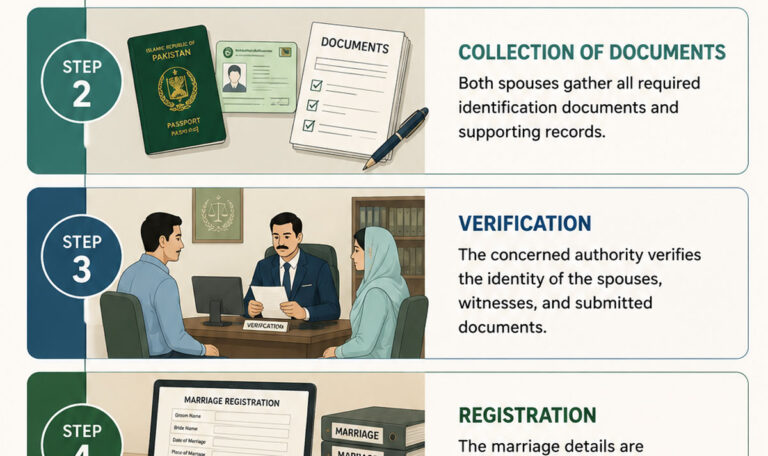
Step 2: Collection of Documents
Both spouses gather all required identification documents and supporting records.
Step 3: Verification
The concerned authority verifies the identity of the spouses, witnesses, and submitted documents.
Step 4: Registration
The marriage details are officially entered into the government record.
Step 5: Issuance of Marriage Registration Certificate
After successful registration, the Marriage Registration Certificate is issued, providing official legal proof of the marriage.
Why Choose Uzair Rasheed Sandhu Advocate?
If you are looking for trusted legal assistance for Civil Marriage Registration in Pakistan, Uzair Rasheed Sandhu Advocate provides professional, reliable, and client-focused legal services. With extensive experience in family law matters, we are committed to handling every case with accuracy, confidentiality, and efficiency.
Our Legal Services Include:
- Civil Marriage Registration
- Court Marriage Assistance
- Marriage Registration Certificate (MRC)
- Overseas Pakistani Marriage Registration
- Foreign National Marriage Registration
- Family Law Consultation
- Legal Documentation & Verification
We understand that every case is unique. Our team provides personalized legal solutions while ensuring full compliance with Pakistani laws and procedures.
Contact Us Today
Uzair Rasheed Sandhu Advocate
📍 Office: Lahore High Court, Lahore, Pakistan
📞 Phone: +92 307 4834430
✉️ Email: legalinformationworld@gmail.com
🌐 Website: https://legalinformation.asia
▶️ YouTube: https://www.youtube.com/@legalinformationasia
Whether you need legal advice, document preparation, or complete assistance with Civil Marriage Registration, we are here to help you every step of the way.
FAQs
What is Civil Marriage Registration?
It is the legal process of officially registering a marriage with the relevant government authority.
Is Marriage Registration mandatory?
Yes, it provides legal proof of marriage and protects the rights of both spouses.
What documents are required?
CNICs, Nikah Nama (if applicable), photographs, and witness details.
How long does registration take?
The processing time depends on the authority and the completeness of your documents.
Can overseas Pakistanis register their marriage?
Yes, subject to the applicable legal requirements.
Can foreigners register a marriage in Pakistan?
Yes, if they meet the legal documentation requirements.
Why is the Marriage Registration Certificate important?
It is required for visas, passports, inheritance, and other legal matters.
Can I register my marriage later?
Yes, delayed registration may be possible under applicable laws.
Do I need a lawyer?
A lawyer is not mandatory but can simplify the process.
How can an advocate help?
An advocate prepares documents, provides legal advice, and ensures a smooth registration process.
.
Conclusion
Civil Marriage Registration is an essential legal process that provides official recognition of a marriage and safeguards the rights of both spouses under Pakistani law. A registered marriage serves as valid legal proof and is often required for immigration, visa applications, inheritance matters, property transactions, child registration, and other legal proceedings. Completing the registration process also helps prevent future disputes by ensuring that your marriage is properly documented.
Whether you have recently solemnized your marriage or wish to register an existing one, understanding the legal requirements, preparing the necessary documents, and following the correct procedure can save time and avoid unnecessary complications. Seeking professional legal guidance can further ensure that your application is completed accurately and in compliance with all applicable laws.